
A big-bird attitude
Their closest relative is the much larger Amazon parrot, and the two share looks, energy and temperament. Parrotlets cannot talk like Amazons, but they make up for it with a sassy personality.
Tiny parrots from the dry tropical forests of South America's Tumbesian region. Parrotlets have the attitude of a much bigger bird.
 Native to South America
Quiet chirper
Native to South America
Quiet chirper
Small enough to fit in a hand, with a personality that does not match the size.
Their closest relative is the much larger Amazon parrot, and the two share looks, energy and temperament. Parrotlets cannot talk like Amazons, but they make up for it with a sassy personality.
Wild-colored parrotlets are easy to sex by their blue markings.
Parrotlets are highly intelligent and form strong bonds with people, but they need daily interaction. They can live in pairs, though a single parrotlet usually bonds more closely with its owner.
Wild parrotlets are green. Mutations can hide the blue markings, so a DNA test is the most reliable way to sex a bird.
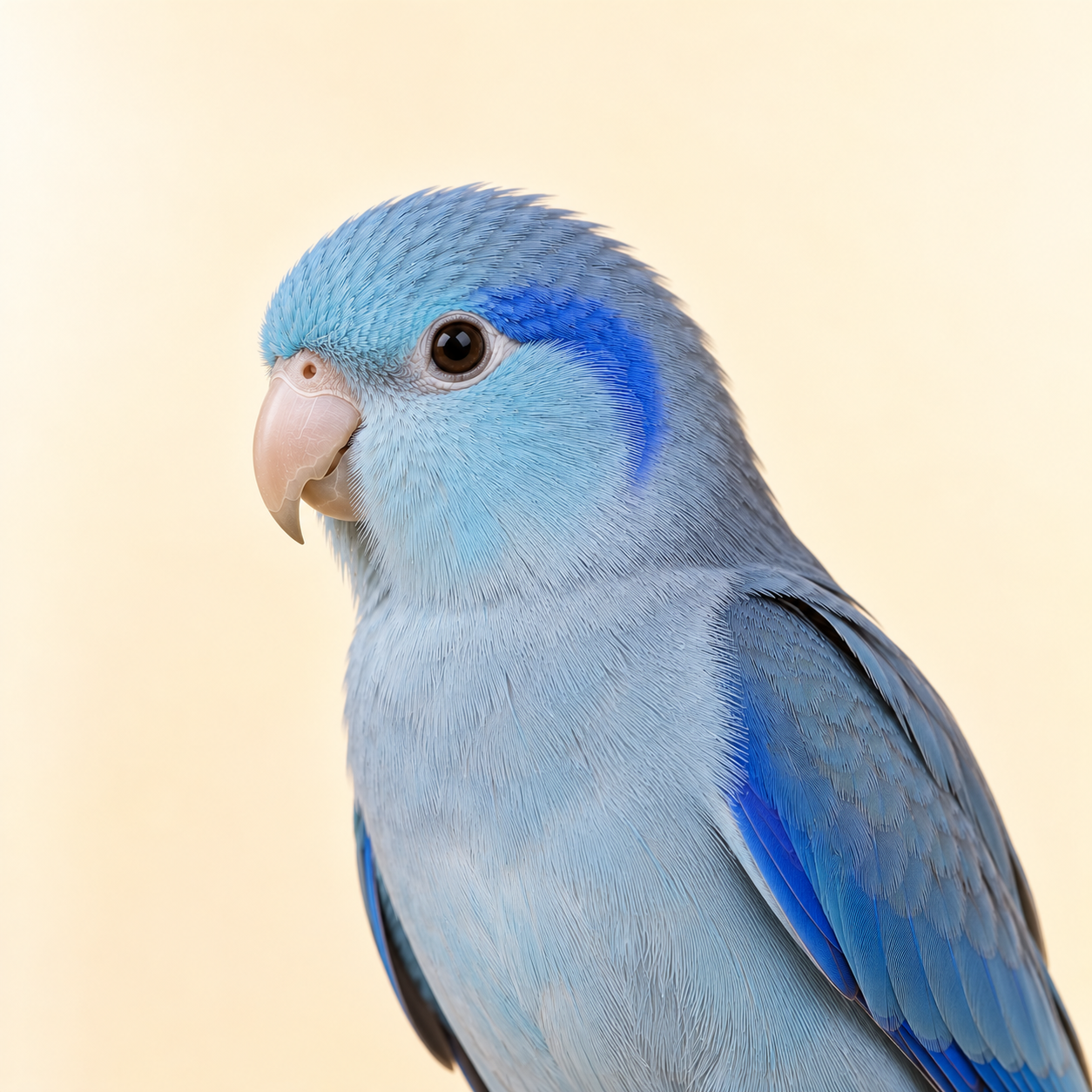
One of the most common. No yellow pigment, so shades run from sky blue to deep cobalt and pastel slate gray.
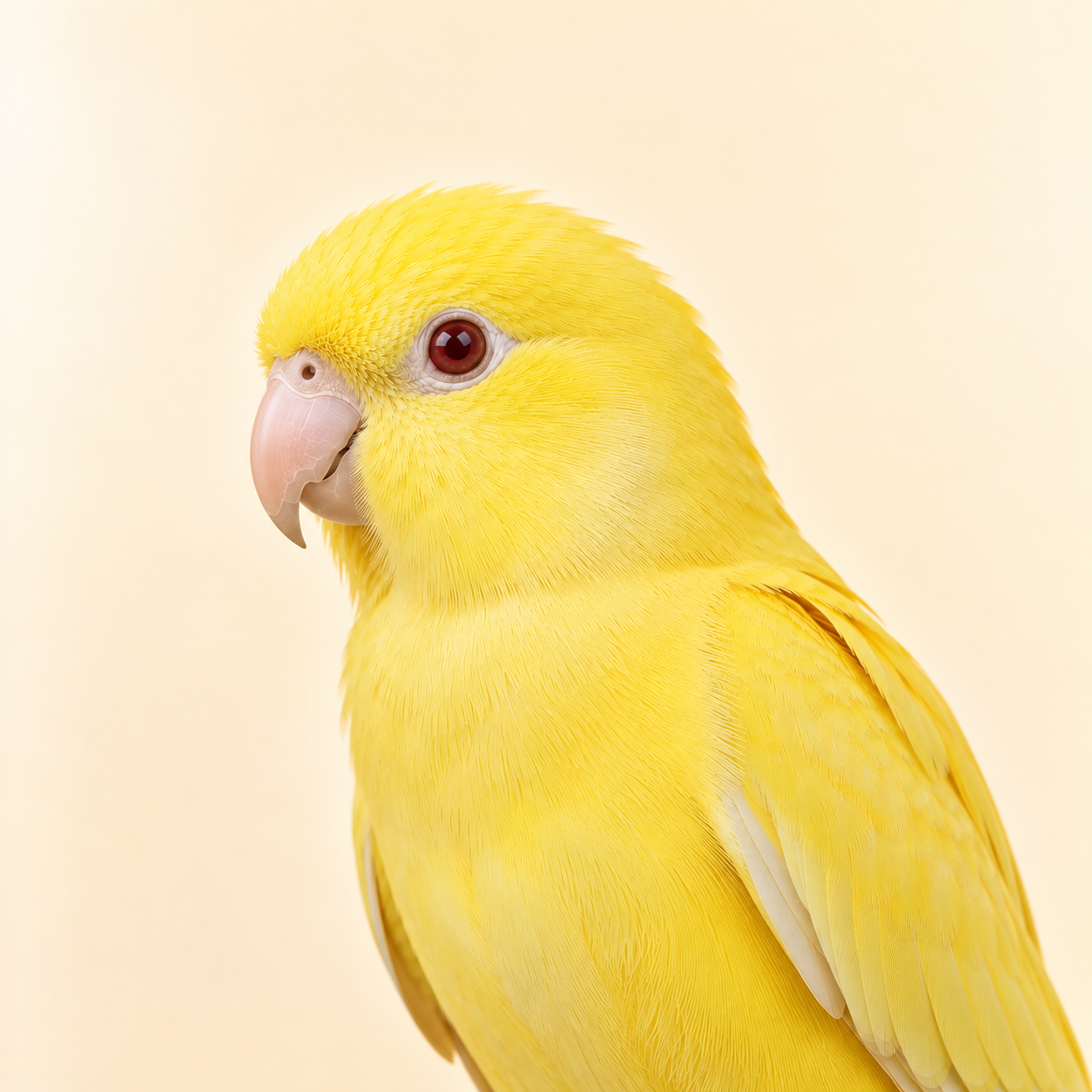
Yellow or creamy white with pink or red eyes. Males have white on the wings where the blue would be.
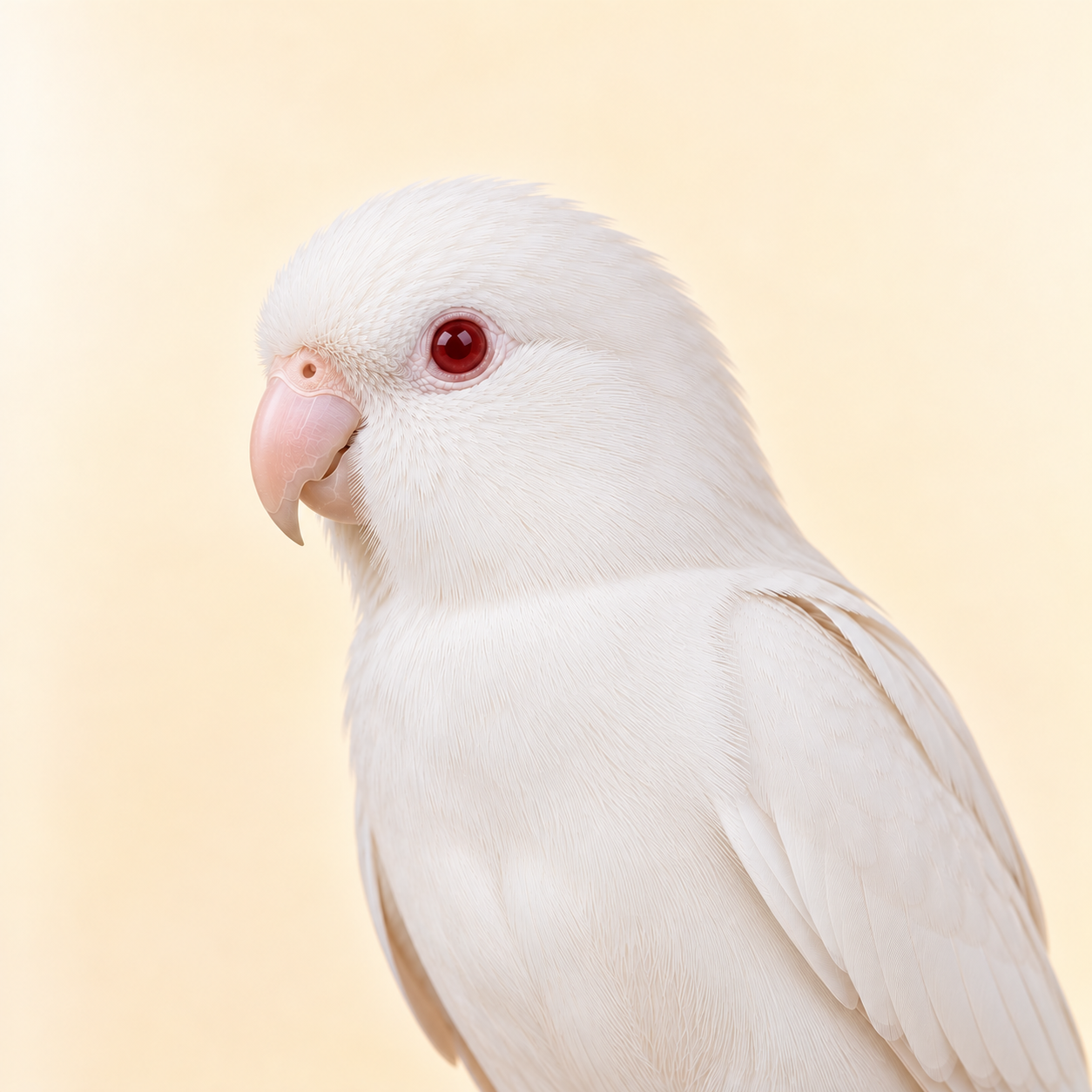
The rarest. A mix of blue and lutino, fully white with pink eyes, feet and beak, and almost impossible to sex by eye.
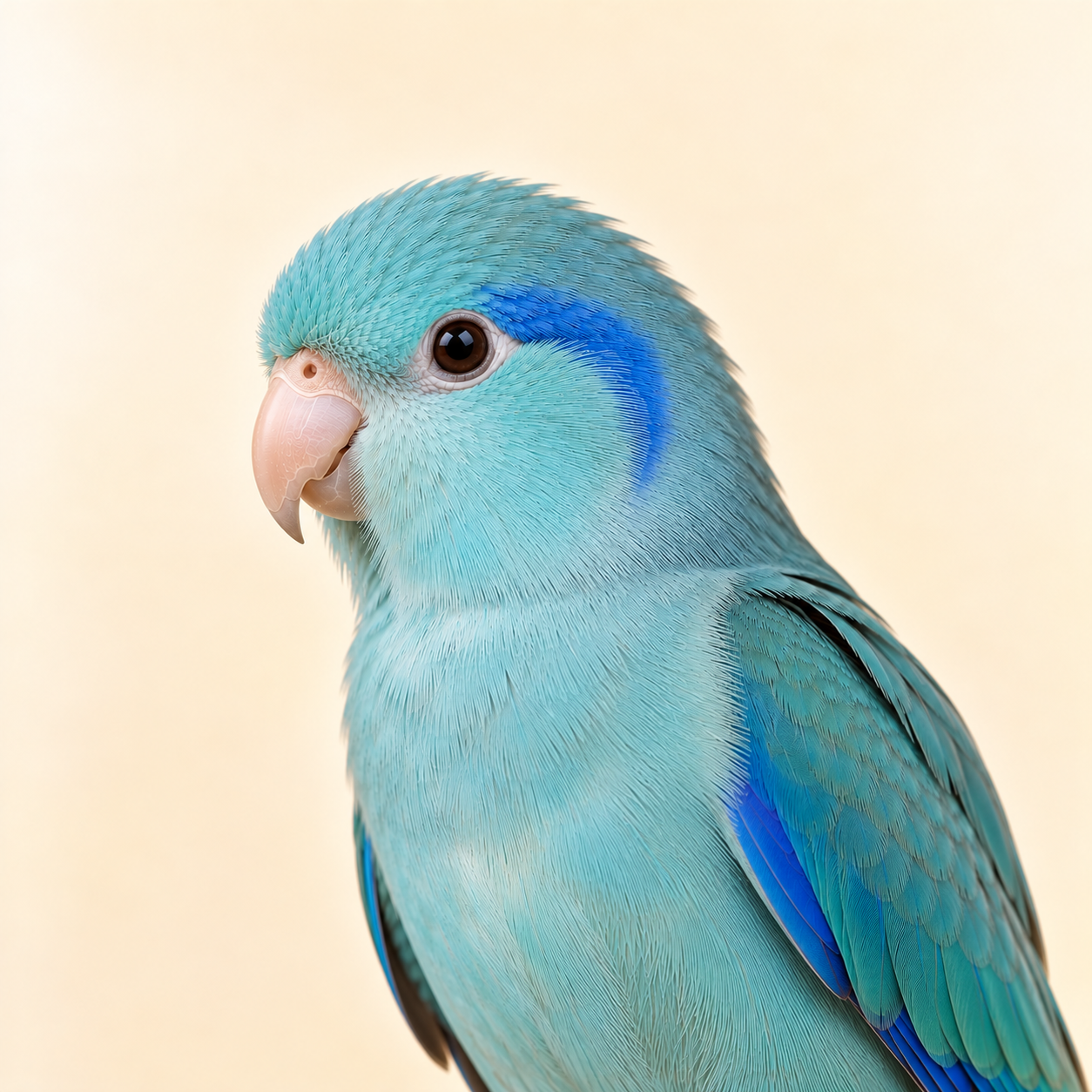
A pastel blend of blue and green in place of the wild green.
What a parrotlet needs every day, taken from the full video.
Wild parrotlets eat berries, seeds and flowers. Offer fruit such as apple, banana, grape, orange and kiwi a few times a week. Avocado, alcohol, caffeine, chocolate, garlic and onion are toxic.
At least 18 inches (46 cm) wide, tall and deep, with bar spacing narrow enough to prevent escape. Go larger if the bird spends long hours inside.
Varied perches, foraging toys and shreddable toys made of natural fiber, leather and soft wood. Rotate toys every couple of weeks.
1 to 3 hours of supervised time a day to fly, play and bond. They are small and fast, so watch them closely.
Block tight spaces, close toilet lids, cover vents and remove unsafe plants before letting a parrotlet roam.
Parrotlets are not dusty like cockatiels, but regular baths or misting keep their feathers clean and healthy.

Personality, telling males from females, colors, diet, cage setup, bird-proofing and the challenges to know before getting one.
Parrotlets are tiny parrots with huge personalities, bold and playful. Their small size does not mean easy care, but with daily commitment they become bright, funny and loyal companions.
Their bold, strong-willed nature can become overwhelming without consistent training.
They will challenge larger animals, so supervision is essential in homes with other pets.
Boredom can lead to cage aggression or feather plucking.
Without daily interaction they can turn moody, nippy or aggressive.
Their size suggests an easy pet, but their care needs suit experienced owners.
They do not scream, but some chirps can still be sharp or loud.
Subscribe to @Parrodise2024 for new Shorts and species videos.


