
Small bird, big personality
Lovebirds are social, active, curious, feisty and playful. In the wild they spend their days in small flocks, socializing, foraging and chattering.
Small, colorful parrots from Africa known for their affectionate nature and playful energy. Lovebirds pack a lot of personality into a tiny body.
 Native to Africa
Big personality
Native to Africa
Big personality
Lovebirds earned the nickname pocket parrots for their small size and affectionate nature.
Lovebirds are social, active, curious, feisty and playful. In the wild they spend their days in small flocks, socializing, foraging and chattering.
Despite the name, a lovebird does not need a partner to be happy. A single bird can thrive with plenty of daily interaction and a strong bond with its owner.
Lovebirds are not dusty like cockatiels, but they still benefit from regular baths and misting. Bathing keeps feathers clean and doubles as enrichment.
Most lovebirds have a colorful head or face. Shades range from peachy pink and teal blue to snowy white and leafy green.

The most common color in the wild.
The most popular pet lovebird, with the most color mutations.
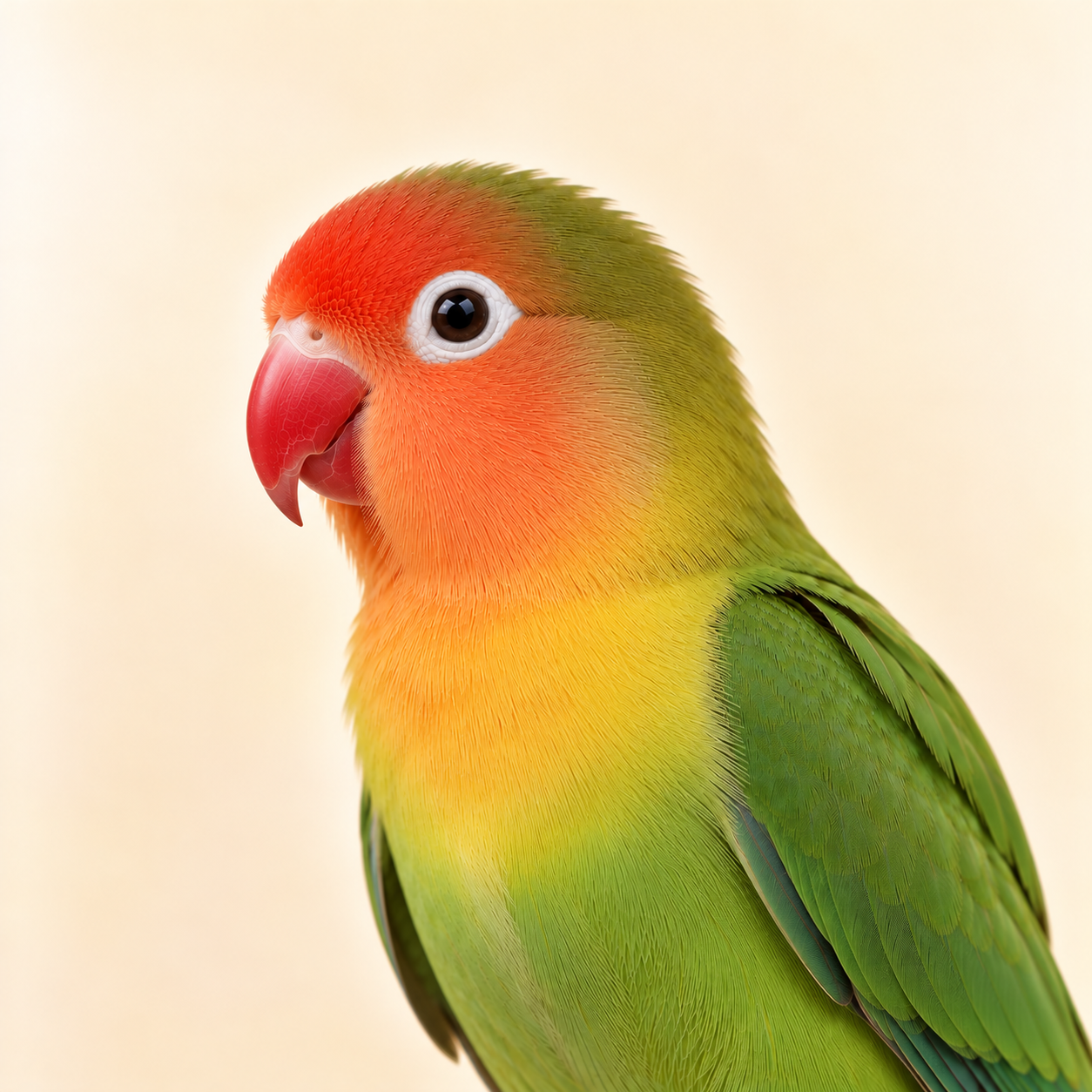
Another popular lovebird kept as a pet.
Abyssinian, Madagascar and red-faced lovebirds can be sexed by feather color. Peach-faced and Fischer's lovebirds look almost identical, so they need a DNA test.
What a lovebird needs every day, taken from the full video.
At least 20 inches (51 cm) wide, tall and deep, with bars no wider than ½ inch (1.3 cm). Go bigger for a pair, and avoid round cages.
Varied perches, chew toys and a foraging box. Natural fiber, palm leaf, soft wood and untreated leather work well. Swap toys every 2 to 3 weeks.
At least 4 hours of supervised time a day, split into sessions if needed. They are fast, curious and fearless, so never leave them alone.
Close doors and windows, cover mirrors, block small gaps, and remove toxic plants and cables before letting them out.
Personality, telling males from females, colors, cage setup, bird-proofing and the downsides to know before getting one.
Lovebirds are bold, beautiful parrots with huge personalities in a tiny body. They are affectionate and playful, but they are not low-maintenance and need a home ready for their energy.
Beneath the cute looks, lovebirds are lively and stubborn, and they are not always sweet.
Without enough stimulation they become loud, frustrated and destructive.
Paper, books and notes left out will end up in pieces. Offer safe shredding toys instead.
Their chirps are quieter than a macaw scream, but the pitch can still bother some people.
If screaming gets attention, they keep doing it. Ignore loud demands and respond when they are calm.
They can be vocal, hormonal and feisty during nesting season.
Subscribe to @Parrodise2024 for new Shorts and species videos.


